
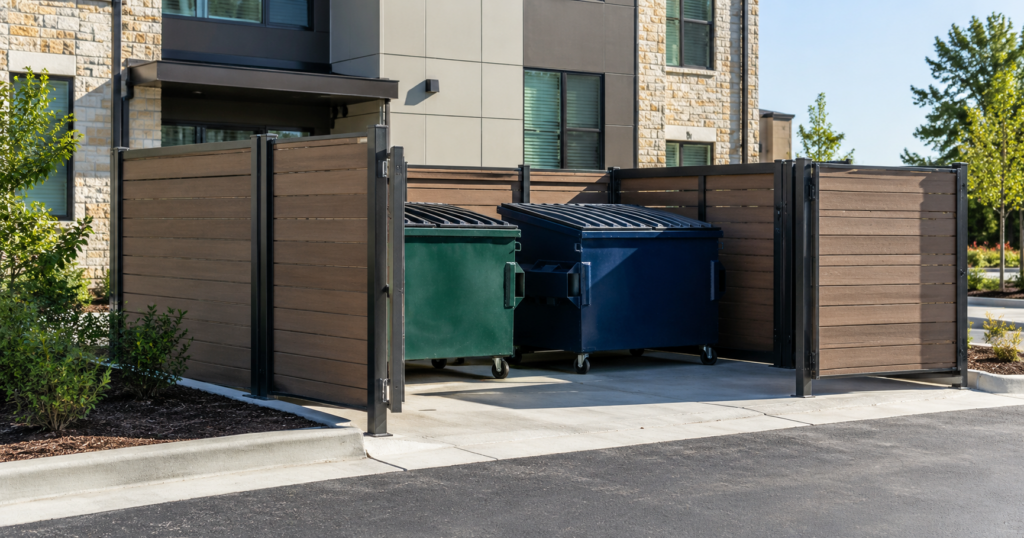
For New Jersey businesses, keeping dumpsters organized and out of sight is about more than maintaining a clean-looking property. Commercial dumpster enclosures can improve safety, protect waste containers, and help businesses meet local property and zoning requirements. However, enclosure requirements can vary between municipalities, making it important to understand local regulations before beginning a project. From required dimensions and placement to material selection and access gates, planning the right enclosure can help create a practical and professional commercial property.
Why Businesses Need Dumpster Enclosures
Commercial dumpsters can quickly become an eyesore when they are placed in open areas without screening. An enclosure provides a designated location for waste containers while helping keep loose trash, debris, and other materials contained.
A properly designed enclosure can also improve the appearance of a commercial property and create a more organized service area. Restaurants, retail stores, offices, apartment complexes, industrial facilities, and other businesses may benefit from a dedicated dumpster enclosure that separates waste collection from customer and employee areas.
NJ Township Requirements Can Vary
One of the most important considerations when planning a commercial dumpster enclosure is that requirements are not necessarily identical throughout New Jersey. Individual municipalities may establish regulations involving screening, location, setbacks, access, construction materials, height, and appearance.
Some towns may have zoning or site-plan requirements that apply to commercial waste storage areas. Others may have specific standards for how dumpsters must be screened from public streets or neighboring properties. Before construction begins, property owners should review the applicable municipal requirements and determine whether permits or approvals are necessary.
Check Local Zoning and Site Plans
A dumpster enclosure may be considered part of a property’s overall site design. This means businesses should not assume that an enclosure can simply be installed wherever there is available space.
Local zoning rules may address where waste containers can be located in relation to buildings, property lines, parking areas, driveways, sidewalks, and public rights-of-way. Existing commercial properties may also have approved site plans that identify designated waste storage areas. Reviewing these requirements before construction can help prevent costly changes later.
Choose Materials That Fit the Property
Material selection plays an important role in both the appearance and durability of a dumpster enclosure. Common options include chain link, vinyl, wood, aluminum, and other metal fencing systems. The best choice depends on the property’s needs, municipal requirements, budget, and desired appearance.
A commercial property with a modern architectural design may benefit from a sleek metal enclosure, while another location may call for a more traditional material that blends with existing fencing or landscaping. The enclosure should be functional while also looking like an intentional part of the property.
Chain Link Dumpster Enclosures
Chain link is a practical option for many commercial applications because it is durable, economical, and relatively easy to maintain. It can be configured to create a secure perimeter around dumpsters while allowing airflow through the enclosure.
Privacy screening can also be incorporated into some chain link designs when additional visual separation is desired. However, businesses should confirm that the proposed configuration meets local screening requirements before selecting this option.
Vinyl and Privacy Fencing
Vinyl fencing can provide a cleaner, more finished appearance for businesses that want to conceal dumpsters from view. Solid panels can create a strong visual barrier while offering a low-maintenance alternative to painted or stained wood.
Because vinyl is available in different styles and colors, it may be possible to coordinate the enclosure with existing fencing or the property’s exterior. Its resistance to moisture can also make it a practical option for outdoor waste-storage areas exposed to rain and snow.
Wood Offers a Traditional Appearance
Wood fencing remains another option for commercial dumpster enclosures. It can provide a natural appearance and may work well on properties where landscaping or existing structures incorporate wood elements.
However, wood generally requires more maintenance than some alternative materials. Moisture, insects, and changing New Jersey weather conditions can contribute to deterioration over time. Regular inspections, staining, sealing, and timely repairs can help extend the life of a wood enclosure.
Don’t Overlook Gate Design
The gate is one of the most important parts of a dumpster enclosure. It needs to provide convenient access for waste collection while remaining secure and easy for employees or property managers to operate.
Gate size and placement should account for the dimensions of the dumpster and the equipment used to service it. A gate that is too narrow or poorly positioned can make waste collection unnecessarily difficult. Durable hinges, appropriate latches, and adequate clearance can help the enclosure function smoothly.
Plan for Dumpster Access
A well-designed enclosure should accommodate more than the dumpster itself. Businesses should consider how collection trucks approach the property and how containers are moved in and out of the enclosure.
The enclosure should not interfere with traffic flow, parking spaces, pedestrian areas, fire access, or other important portions of the property. Planning for regular waste collection from the beginning can help prevent operational problems after installation.
Work With an Experienced NJ Fence Company
Commercial dumpster enclosures require careful planning because they combine fencing, access, property layout, and potentially local regulatory requirements. An experienced NJ fence company can help businesses evaluate material choices, enclosure configurations, gates, and installation considerations.
Before starting the project, it is still important for the property owner or project manager to verify applicable municipal requirements. Local rules can change, and requirements may differ from one New Jersey township or municipality to another.
Build a Better Commercial Waste Area
A commercial dumpster enclosure can make a significant difference in the appearance, organization, and functionality of a New Jersey property. By researching local requirements, choosing durable materials, planning appropriate access, and investing in professional installation, businesses can create an enclosure that serves its purpose for years.
Whether you prefer the practicality of chain link, the privacy of vinyl, the traditional look of wood, or another commercial fencing solution, thoughtful planning is the key. Start by understanding your municipality’s requirements and evaluating how the enclosure will work with your property’s existing layout.
