
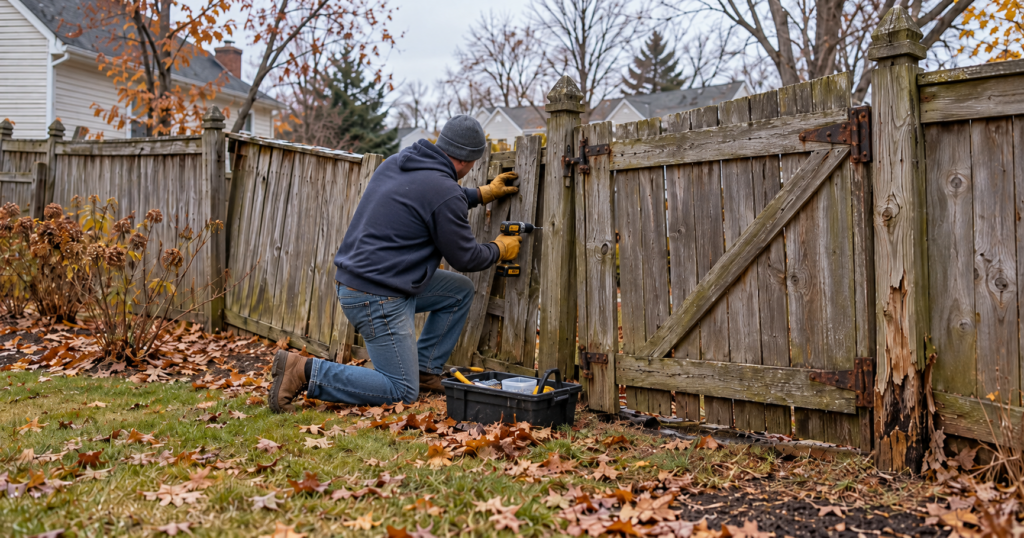
As fall temperatures arrive in Central Jersey, homeowners begin preparing their properties for the colder months ahead. While gutters, roofs, and outdoor plumbing often receive attention before winter, fencing deserves a place on the seasonal maintenance checklist. Freezing temperatures, snow, ice, and winter winds can turn small fence problems into expensive repairs. Taking care of damage before the first freeze can help protect your fence and keep your property secure throughout the season.
Rotted or Decaying Posts
Fence posts are responsible for supporting the entire structure, making damaged posts one of the most important problems to address before winter. Wood posts can develop rot after years of exposure to moisture, especially near the ground where water can accumulate. A post may appear intact above the soil while being significantly weakened below the surface.
Check each post for soft spots, cracks, discoloration, or excessive movement. A post that is already unstable may not withstand strong winter winds or the added weight of snow and ice. Replacing severely deteriorated posts before freezing weather arrives can help preserve the stability of the entire fence.
Leaning Fence Sections
A fence that is beginning to lean may be showing signs of shifting posts, weakened soil, or structural deterioration. Even a slight angle can become a larger problem after heavy rain, snow, or repeated freeze-thaw cycles.
Walk along the fence line and look for sections that are no longer straight or posts that appear to be pulling away from their original positions. Correcting the underlying issue in the fall is generally preferable to waiting until a winter storm causes a section to collapse. Stabilizing the fence now can also prevent stress from transferring to neighboring posts and panels.
Cracked or Broken Boards
Wood fencing naturally weathers over time, and individual boards can crack, split, warp, or break. Damaged boards create openings that can allow wind and moisture to affect the surrounding fence.
Before winter, inspect boards from top to bottom and replace pieces that are beyond repair. Small cracks may also deserve attention because freezing temperatures can cause moisture inside the wood to expand, potentially making existing damage worse. Keeping the boards in good condition helps maintain both the appearance and performance of the fence.
Loose Posts and Hardware
Even when fence posts and boards are in good condition, loose hardware can compromise the structure. Screws, bolts, brackets, hinges, and other fasteners can loosen over time because of regular use, weather exposure, and movement.
Inspect connections throughout the fence and tighten or replace hardware where necessary. Pay particular attention to gates because frequent opening and closing can put additional stress on hinges and latches. Secure connections can help prevent sections from shifting when winter winds begin to pick up.
Sagging or Misaligned Gates
A gate that drags against the ground or no longer closes properly can become a significant problem during winter. Sagging may be caused by worn hinges, a weakened gate frame, shifting posts, or excessive weight.
Check that each gate opens and closes smoothly and that the latch lines up correctly. If the gate has become noticeably uneven, identify the cause rather than simply adjusting the latch. Repairing the underlying problem before freezing temperatures arrive can help prevent the gate from becoming stuck or damaged.
Gaps Under the Fence
Gaps along the bottom of a fence can develop as soil shifts, landscaping changes, or fence posts settle. While a small opening may seem harmless, it can create problems for homeowners with pets and can allow water and debris to accumulate in certain areas.
Walk around the entire perimeter and check for unusually large gaps beneath the fence. Addressing these spaces before winter can improve security and help maintain a consistent barrier around the property. If soil has shifted significantly, the fence may need to be adjusted or sections may require additional support.
Signs of Rust or Corrosion
Metal fencing and hardware can develop rust and corrosion after prolonged exposure to rain, humidity, and moisture. While minor surface corrosion may be manageable, extensive deterioration can weaken components and eventually affect the fence’s structural integrity.
Inspect chain link fencing, metal posts, gates, hinges, and fasteners for signs of rust. Areas where protective coatings have worn away deserve particular attention. Addressing corrosion before winter moisture and snow arrive can help extend the useful life of your fencing and prevent small maintenance issues from becoming larger structural problems.
Why Fall Is the Right Time for Fence Repairs
Fall provides Central Jersey homeowners with a valuable window for completing exterior repairs before the ground freezes and winter weather makes outdoor projects more difficult. Addressing fence problems early also gives homeowners time to schedule professional repairs before winter-related demand increases.
Waiting until after the first major storm can turn a relatively simple repair into an emergency. A weakened post that might have been replaced during the fall could instead result in a fallen fence section after heavy snow or strong winds. Proactive maintenance is often easier and less disruptive than repairing extensive damage later.
Prepare Your Fence for Central Jersey Winter
A fence does not have to be perfect to make it through winter, but obvious problems should not be ignored. Rotted posts, leaning sections, damaged boards, loose hardware, sagging gates, gaps, and corrosion can all become more serious when exposed to freezing temperatures and winter precipitation.
By inspecting your fence during the fall and addressing problems before the first freeze, you can help protect your investment and maintain your property’s appearance, privacy, and security. A little preparation now can make your fence much better equipped to handle everything a Central Jersey winter brings.
